

What to Put on Outside Steps to Prevent Slipping: Solutions for Homes and Businesses
Did you know? Falls are the leading cause of injury hospitalisation in Australia, at 43% of all cases. About 15,500 hospital stays a year are from falls on stairs or steps.
Source: Australian Institute of Health and WelfareYour outside steps might feel secure on a dry afternoon. After rain, the same staircase can become a place where every footstep needs extra care.
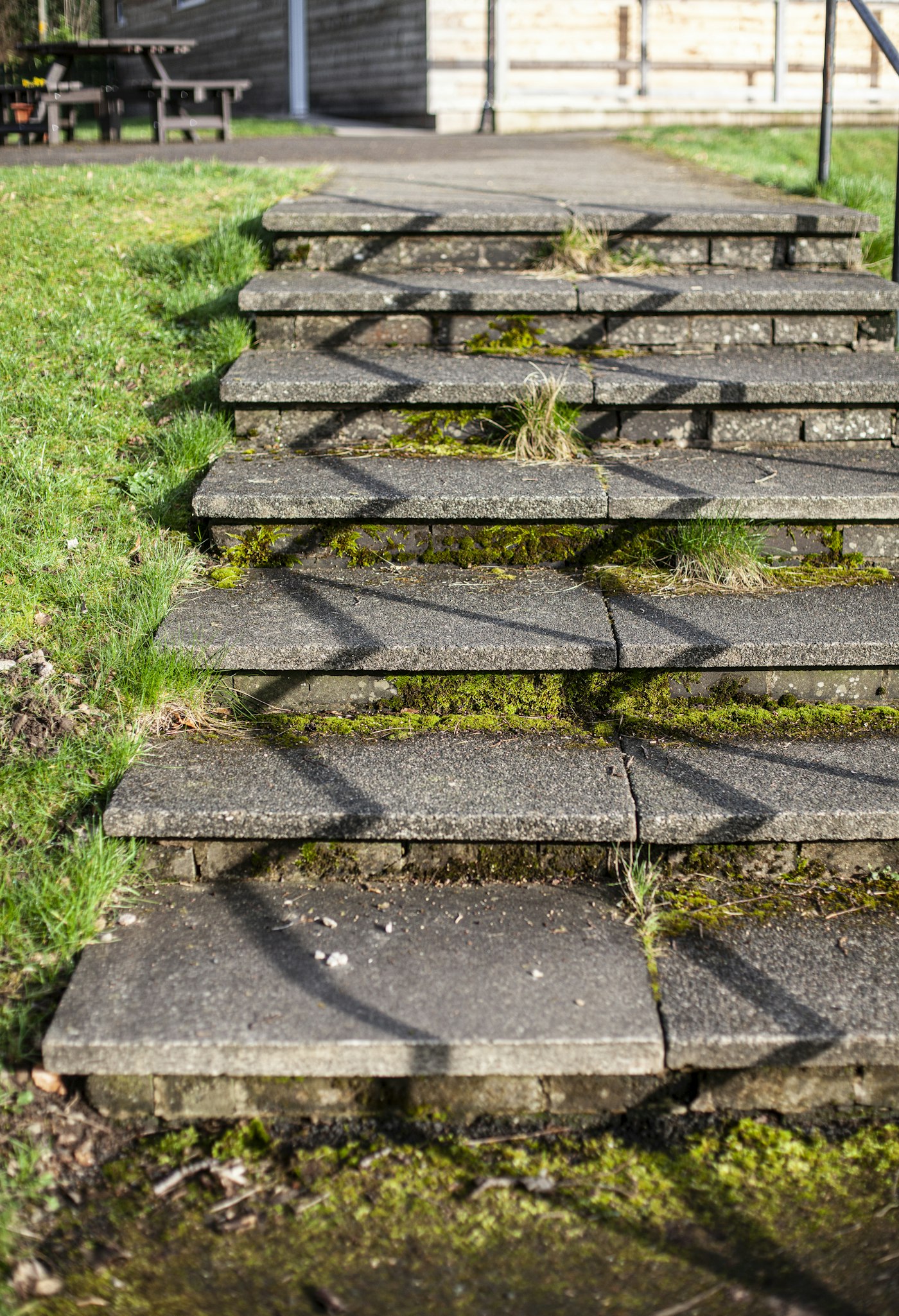
You've probably felt it. That half-second lurch on the front steps after rain, when your foot skids off the edge. Maybe it was you. Maybe it was your mum, a delivery driver, or a customer walking into your shop.
So if you're wondering what to put on outside steps to prevent slipping, common options include exterior anti-slip tape, stair nosings and textured coatings. The right choice depends on the stair material, weather exposure, foot traffic and maintenance needs.
But before adding anything, it helps to understand what is making the stairs slippery.
Why outdoor steps get slippery
It's rarely one thing. Usually three or four of these stack up:
- Water film: rain, dew, sprinklers and pool splash sit on smooth tiles, sealed concrete and painted timber.
- Algae, moss and mould: shaded timber and concrete steps grow a slick green layer, especially through winter.
- Worn surfaces: foot traffic polishes the front edge of each tread first, exactly where your foot lands going down.
- Poor visibility: when the step edge blends into the tread, people misjudge it and over-step. This is a trip, not just a slip.
- Smooth finishes: glossy tiles, polished stone and freshly oiled decking look great and grip badly when wet.
A surface that provides reasonable traction when dry may perform differently when wet. That's why choosing a treatment based only on its appearance, or how it feels in dry weather, can be misleading. WorkSafe Queensland's guidance on safe stairs recommends slip-resistant treads and nosings that stay visible in all lighting.
Start by checking:
- Does water collect on the steps after rain?
- Are moss, algae or leaves building up?
- Is the existing finish smooth or worn?
- Are step edges damaged or difficult to see?
- Are any existing strips lifting?
These observations help you choose a solution that addresses the cause.
The step edge is where it goes wrong
Here's what most guides miss. Coming down stairs, your foot lands close to the front edge of each tread, the nosing. That's the most worn, most exposed and least visible part of the step.
That's why Australian accessibility standards focus on it. AS 1428.1 calls for a continuous contrasting strip 50–75 mm deep at the tread edge, with at least 30% luminance contrast against the tread.
Which option suits your property?
| Situation | Options to investigate | Main consideration |
|---|---|---|
| Residential entrance | Exterior tape or stair nosings | Material compatibility and appearance |
| Busy shop, office or hospitality entrance | Stair nosings compliant with applicable AS 1428 requirements | Wet-condition performance, accessibility and wear |
| Workplace stairs exposed to contaminants | Fibreglass or RMN safety treads | Cleaning compatibility and maintenance |
| Damaged or uneven stairs | Repair, resurfacing or replacement | Correcting the underlying defect |
These are starting points for comparison. Product suitability depends on the individual staircase.
What to put on outside steps to prevent slipping
1Exterior anti-slip tape
Anti-slip tape adds a textured strip to the walking surface. It is an option to consider when you want to improve grip without covering the entire step.
For residential stairs, exterior-rated tape may suit smaller entrances and compatible, sound surfaces. For commercial stairs, check that the selected product is suitable for the expected traffic and cleaning conditions.
Preparation matters. Floorsafe recommends making sure the surface is clean and completely dry before applying any anti-slip tape. Tiles or metal stairs can be cleaned with acetone to remove oils or residues, provided it is compatible with the surface finish. Follow the tape's installation instructions for application temperature and any primer requirements.
Inspect the tape regularly for wear, damage and lifting edges.
2Anti-slip stair nosings
A stair nosing fits along the front edge of a step. Products with a slip-resistant insert or textured finish can add grip at the edge, while a contrasting colour can make the step easier to identify.
Nosings are worth considering where the step edge is slippery, worn or hard to distinguish.
At home, that might be an exposed front entrance. In a commercial setting, it might be a staircase used by customers unfamiliar with the building.
Choose a profile suited to the stairs and installation method. A poorly fitted nosing can introduce a trip hazard.
3Textured anti-slip coatings
An exterior coating with a specified slip-resistant texture is another option, particularly when you want to treat a larger walking area.
Before choosing one, check its suitability for the existing material, exposure to weather and expected use. Ask about surface preparation, application conditions, curing time and future maintenance.
Ordinary paint and a purpose-designed slip-resistant coating should not be treated as interchangeable. Request evidence of performance in the conditions your stairs will experience.
4Replacement or resurfacing
Sometimes the problem extends beyond surface grip.
Rotting timber, loose tiles, broken concrete or uneven steps need repair or replacement. Adding a strip or coating will not correct an unstable tread or inconsistent step height.
Where stairs are being rebuilt, consider slip resistance, drainage, lighting and handrails together.
How the common fixes compare
For outdoor steps, a mechanically fixed anti-slip stair nosing usually outlasts coatings, tapes and mats. Here's how the common fixes compare.
| Option | Best for | Outdoor lifespan | DIY? | Watch-outs |
|---|---|---|---|---|
| Carborundum stair nosing (aluminium or fibreglass base) | High-traffic outdoor and commercial steps | Years | With basic tools | Higher upfront cost |
| Fibreglass stair nosing | Timber decks, concrete, wet or chemical areas | Years | Yes, screw or glue down | Choose a contrasting colour |
| Aluminium nosing with anti-slip insert | Tiled or concrete entry steps | Years | With basic tools | Replace inserts when worn |
| Anti-slip tape | Quick fix, renters, low-traffic steps | Months | Yes | Corners lift on rough or wet surfaces |
| Anti-slip paint or grit additive | Concrete paths and whole treads | Months to 1–2 years | Yes | Wears first at the step edge |
| Rubber treads or mats | Indoor steps | 1–2 years | Yes | Hold water and can shift |
| Chemical etch treatment | Smooth tiles and stone | 1–2 years | Pro recommended | Slightly changes the finish |
Slippery stairs solutions: homes vs businesses
Homeowners need a fix that's safe, tidy and DIY-friendly. Businesses need one that also meets the NCC, AS 1428.1 and their WHS duty of care.
How to make residential stairs less slippery
For a home, begin with the condition of the steps and the people using them.
Clear leaves and other debris, address recurring moss growth using a method suitable for the surface, and investigate pooling water. Then compare grip treatments that suit the stair material.
Think about everyday use too. Will people use the stairs barefoot? Do children or older family members use them? Is the entrance well lit after dark?
A coarse industrial finish may not suit barefoot use. A discreet strip may suit your preferred appearance, but still needs appropriate wet-weather performance and secure installation.
Indoor stairs and bare feet? Floorsafe's non-abrasive anti-slip tape has a smooth vinyl finish that grips without feeling rough underfoot. It's made for indoor and domestic use, so it suits internal stairs where people walk barefoot. It comes in clear, white and black.
For businesses: shopfronts, offices, strata, schools, aged care and industrial sites
In commercial buildings, slip resistance is a compliance question as much as a safety one.
- ✓Slip ratings: the NCC sets minimum slip resistance under AS 4586. Stair treads and nosings need P3 in dry areas and P4 in wet or external areas.
- ✓Visibility: AS 1428.1 calls for a single contrasting strip 50–75 mm deep, within 15 mm of the tread edge, with at least 30% luminance contrast.
- ✓Durability: carborundum on aluminium or fibreglass handles trolleys, forklifts and heavy foot traffic. Heavy-duty safety stair treads cover whole treads on steel or worn steps.
- ✓Duty of care: WorkSafe guidance asks for slip-resistant nosings, good lighting, handrails, and a maintenance and hazard-reporting routine.
Floorsafe's range covers both sides: an AS 1428.1-compliant range for commercial projects, outdoor and residential nosing ranges, and recessed options for new builds.
Make your site's stairs safe and compliant
Managing a shopfront, office, strata building, school or industrial site? Browse our AS 1428.1-compliant stair nosings, then send us your stair count and measurements for a fixed-price quote.
Prefer to talk it through? Call our team on 1300 717 769.
What our customers say
Floorsafe has supplied anti-slip products to Australian homes, businesses and government organisations for over 25 years.
"A good solid product and very easy to use, come is a few colors. passes the slip resistance test"
"Great Quality!"
"Communication A+, responsivity A+, delivery A+"
Make your stairs safe before the next rain
Not sure which option suits your stairs? Order a free stair nosing sample pack, feel the grip for yourself, and see which colour works with your steps.
Order before 12pm for same-day dispatch on most orders, Australia-wide.
FAQ
What's the cheapest way to make outside steps less slippery?+
Anti-slip tape is the cheapest quick fix.
Does anti-slip paint work on outdoor stairs?+
It helps on whole treads and paths, but wears first at the step edge. Pair it with a nosing for lasting grip.
What's the best anti-slip for timber deck stairs?+
Fibreglass stair nosings and anti-slip strips. They screw into timber, handle moisture, and come in contrasting colours.
Do commercial stairs need slip-rated nosings?+
Yes. Under the NCC, stair treads and nosings need P3 in dry areas and P4 in wet or external areas, tested to AS 4586.
Can I install stair nosings myself?+
Yes. Most profiles fix with screws or adhesive using basic tools.